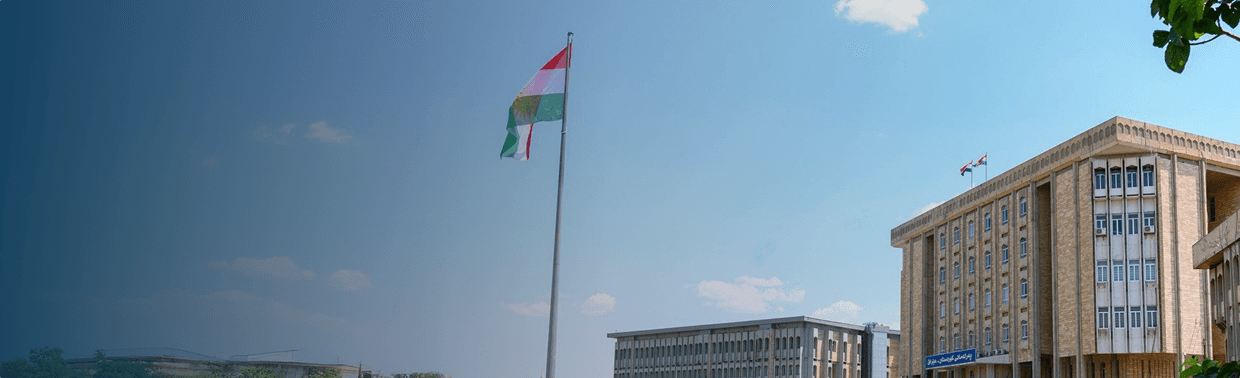
The Historical Foundations of the Kurdistan Parliament
The Kurdistan National Assembly (later renamed Parliament) was established in 1992, in the first free and fair elections ever held in the Kurdistan Region or in any part of Iraq. The election was held just a year after the Kurdish Uprising of March 1991, when the people rose up against the Ba’ath regime of Iraqi President Saddam Hussein following the liberation of Kuwait.
The people of Kurdistan, as well as their political parties and leaders, wanted to hold their first ever democratic election after decades of brutal dictatorship under the Iraqi central government. This was made possible by the no-fly zone created by the US, UK, and France above the 36th parallel, which prevented attacks by Saddam Hussein’s forces.
The people were hit by an international UN embargo on all of Iraq, including Kurdistan. Kurdistan also urgently needed an administration and legislature to fill the vacuum when Saddam Hussein withdrew his administration and imposed an internal embargo on Kurdistan that stopped food and fuel supplies, disconnected electricity, and restricted movement.
Role of the Speaker
- The Speaker of the Kurdistan Parliament is one of the three highest-ranking officials in the Kurdistan Region, alongside the President of the Region and the Prime Minister.
- The Speaker is elected by MPs at the beginning of a four-year parliamentary term. Only a current MP may be elected.
- The Speaker, supported by the Deputy Speaker and Secretary:
- Chairs parliamentary sessions
- Decides who may speak
- Puts questions to MPs for voting
- Enforces parliamentary rules
- Oversees the agenda and timetable
- Represents the Parliament domestically and internationally
- The Deputy Speaker and Secretary assume the Speaker’s authority in her absence and support parliamentary representation at home and abroad.